Skip to content
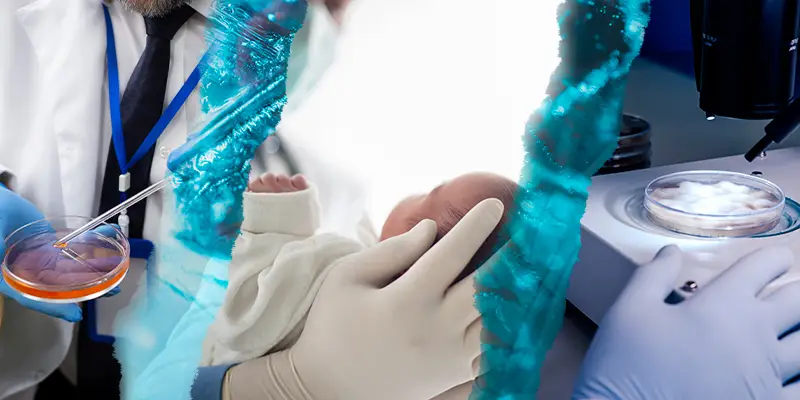
Is it better to use frozen embryos or create new embryos for a surrogacy process?
Most intended parents believe the answer is obvious… until they discover that success rates can be the same —or even better— with frozen embryos, depending on the case.
This raises a big question that is not usually answered clearly on the internet: What really happens inside the laboratory, in the surrogate’s body, and in the embryo when frozen embryos are chosen?
In this article we will explain everything. You will learn what science says, what the success rates are, what medical risks exist, and in what situations this option is the most recommended within surrogacy.
What are frozen embryos?
Frozen embryos are those that have been generated through in vitro fertilization (IVF) but are not transferred immediately; instead, they are preserved at very low temperatures for future use.
Cryopreservation is the name given to this procedure, which is carried out using a sophisticated technique called verification. This prevents the formation of ice crystals and protects the embryo’s cellular structure .
“Vitrification has transformed assisted reproduction, making it possible for embryo survival rates after thawing to be over 95%.”
In a surrogacy process, frozen embryos are transferred to the surrogate’s uterus only if the endometrium is in optimal condition. This allows for something crucial: not having to do everything simultaneously.
The process is divided into three clearly defined stages due to this planning. First, the embryo is created in the laboratory; then, the surrogate is carefully and precisely prepared; and only after ensuring that everything is perfectly synchronized is the embryo transfer performed. This separation is not an insignificant detail: it allows for the optimization of each stage of the treatment, reduces the margin of error, and enhances medical supervision.
Transferring a fresh embryo immediately after its creation was the norm a few years ago. However, this practice has been declining due to advances in reproductive medicine. More and more clinics and experts are now opting for frozen embryos, as they offer a higher level of medical safety, allow for optimal synchronization with the surrogate’s body, enable pre-implantation genetic testing, and provide crucial flexibility for intended parents, especially if they live in another country or need to plan the procedure further in advance.
This trend is not a belief, but a fact that is supported by science. The American Society for Reproductive Medicine (ASRM) states that:
“Frozen embryo transfers show comparable or even better results than fresh embryo transfers in many patient groups.”
What does “success rate” really mean?
It’s important to understand that not everything is measured the same way when discussing the success of surrogacy. In reproductive medicine, there are different indicators, but not all of them carry equal weight. On the one hand, there’s the implantation rate, which indicates whether the embryo successfully attaches to the uterus. On the other hand, there’s the clinical pregnancy rate, which confirms pregnancy through ultrasound. And finally, there’s the live birth rate, which is what truly matters to intended parents, as it calculates how many treatments result in the birth of a healthy infant.
This last indicator is the one scientists emphasize. According to an analysis presented by the Cochrane charity in the United Kingdom: “The findings indicate that, if the cumulative live birth rate is 58% after a conventional IVF/ICSI strategy, the rate after a cryotransfer strategy would be between 57% and 63%.”
For a long time there was a fear that the freezing process could “weaken” the embryo or decrease its chances of implantation, but current scientific evidence shows just the opposite.
Today we know that the results obtained with frozen embryos are very similar to those of fresh embryos, and in some cases even slightly better. This is because freezing allows us to choose the best time for transfer, when the surrogate’s body is truly ready to receive the embryo. There is no rush, no unnecessary hormonal interference, and the entire process can be planned more precisely.
In surrogacy arrangements, these figures are usually even slightly higher. This is because the surrogates are young women, who have undergone prior medical evaluation and have a healthy uterus, which improves the chances of implantation and pregnancy progression.
Even so, one of the most frequent concerns parents have is whether the freezing process can affect the embryo. It’s a logical worry, but the scientific evidence is clear. When modern vitrification is used, the answer is no. This technique allows the embryo to be preserved without damaging its structure or its developmental capacity.
From a medical standpoint, preparing the surrogate is key to success. The endometrium must be at the precise stage of development to receive the embryo, neither too early nor too late. To achieve this, a highly controlled protocol is followed, including hormonal regulation, adequate endometrial thickening, and precise synchronization with the embryo thawing process.
This meticulous monitoring is not accidental. Thanks to it, risks such as implantation failure, biochemical pregnancies, and early miscarriages are significantly reduced, thus increasing the likelihood that the process will progress safely from the start.

Is it better to use frozen embryos or create new ones?
The decision between using frozen embryos or creating new embryos is not the same for all families. It depends greatly on each specific situation and the parents’ goals. In many cases, opting for frozen embryos is the best alternative when viable embryos already exist, when genetic testing such as PGT-A is desired, or when very precise planning of the process is sought. This is especially useful for parents living in another country, as it allows for greater ease in organizing timelines, travel, and legal aspects.
However, there are situations where creating new embryos may make more sense. For example, when no previous embryos exist, when it’s necessary to adjust the donor selection, or when the genetic age is young and the goal is to maximize the number of available embryos from the outset. In these cases, starting the process from scratch can offer more flexibility and adaptability to the parents’ medical and personal needs.
The important thing to understand is that there isn’t a single right option, but rather a suitable strategy for each case. And in that choice, science plays an increasingly important role. Reproductive medicine hasn’t stood still, and the technological advances of recent years have completely changed the way we work with embryos.
Embryo time- lapse systems are used to observe embryo development without removing it from the incubator, along with artificial intelligence tools that help select embryos with the greatest implantation potential and increasingly safe and effective cryopreservation methods. Thanks to these innovations, the use of frozen embryos is not only safe, but has also become an increasingly precise and reliable option within surrogacy.
What role does the genetic age of the embryo play?
The genetic age of the embryo is undoubtedly the factor with the greatest impact on the chances of success. When the embryo comes from eggs of women under 35, the chances of pregnancy and live birth tend to be quite high. These rates remain at an average level between 35 and 40 years of age; from 40 onwards, experts generally advise undergoing genetic testing such as PGT-A to improve the chances of success and reduce the possibility of chromosomal abnormalities.
It’s crucial to clarify a point that can sometimes be confusing: the mother’s age does not impact the child’s genetics, although it is very favorable for implantation. The environment is more conducive to the embryo implanting and the pregnancy progressing correctly, since these are generally young women with a healthy uterus.
For this reason, leading medical guidelines recommend a single embryo transfer whenever possible. Transferring only one embryo significantly reduces the risks associated with multiple pregnancies without substantially decreasing success rates. This strategy is designed to protect both the surrogate and the developing baby.
The costs associated with using frozen embryos may seem high at first glance. However, in practice, it is often more effective. By allowing for better planning and more thorough medical monitoring, fewer failed cycles and complications during pregnancy are achieved, and unnecessary interruptions to the process are avoided. All of this means that, in the long term, using frozen embryos represents not only a stable medical option but also a more predictable and cost-effective alternative for many families.
The future of surrogacy with frozen embryos
Everything indicates that the use of frozen embryos in surrogacy is not a passing fad, but rather the path shaping the future of assisted reproduction. A growing number of clinics, specialists, and medical guidelines agree that this strategy is becoming the new standard, not for convenience, but because it offers better conditions for everyone involved.
The reason is simple. Working with frozen embryos offers greater medical certainty, as it allows for a more thorough preparation of the surrogate and reduces the risks associated with a poorly timed transfer. It also provides greater control over the process, from embryo selection to the precise moment of transfer, resulting in more accurate and better-planned decisions. And, as a result, success rates remain high and, in many cases, even improve.
This trend is not based on perceptions or isolated experiences. It is supported by scientific data, long-term studies, and the accumulated experience of thousands of treatments worldwide. As technology advances and medical protocols are refined, the use of frozen embryos is becoming increasingly reliable, predictable, and aligned with the ultimate goal of any surrogacy process: achieving a safe pregnancy and the birth of a healthy baby.
Frequently Asked Questions ( FAQs )
- Do frozen embryos have a lower chance of implantation?
No. Rates are similar or higher when using modern vitrification. - How long can an embryo be frozen?
Decades, with no proven loss of quality. - Is it safe for the baby?
Yes. Studies do not show an increase in congenital malformations. - Does the surrogate notice any difference?
No. The medical process is the same. - Can I have genetic testing done before freezing?
Yes, and that’s one of the biggest advantages. - What happens if the embryo does not survive thawing?
It is rare (less than 5%), and there are usually backup embryos. - Is it the best option in international surrogacy?
In most cases, yes, due to planning and control.