Skip to content
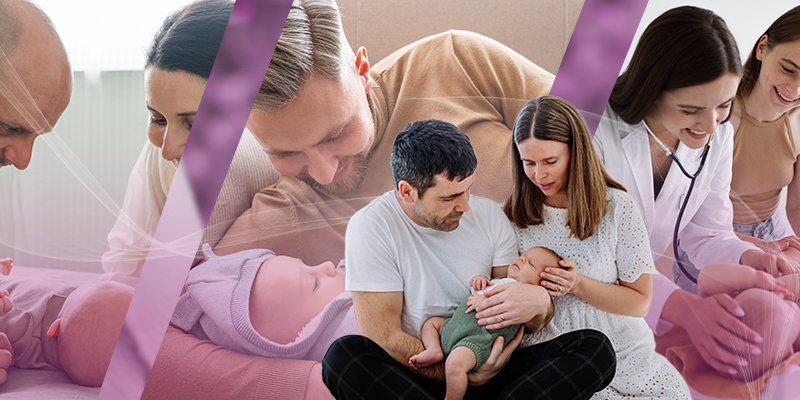
Surrogacy process that, while many eagerly anticipate it, also stirs deep and sometimes unexpected emotions. It’s that instant when, after months of preparation, phone calls, difficult decisions, and a great deal of support, what has been so longed for finally happens: the birth of the baby. However, what follows has an emotional depth that is rarely spoken of aloud, but which forever transforms the intended parents.
And it’s precisely in that part —the part that almost no one explains and that is full of nuances— that something important lies hidden, which you will discover as you read on.
The psychology of childbirth through surrogacy is not simply a matter of “nice emotions.” It’s a period of real adjustment, where the mind needs time to process the experience and embrace the new role of mother or father. It’s a complex journey, yes, but also full of meaning, learning, and a deep connection that strengthens every day.
Next, you will understand how this adaptation works, what intended parents really feel, and what emotional tools can help them navigate this stage with calm, clarity, and confidence.
A point of arrival… and at the same time a point of departure
Throughout the surrogacy process, intended parents experience a mixture of excitement and anticipation. They gather information, plan, make important decisions, and, in many cases, travel thousands of miles to be present for their child’s arrival. But what they sometimes don’t prepare for so clearly is the emotional impact that comes immediately after the birth.
Because that moment doesn’t just mean “holding the baby in your arms,” but rather opens a completely new stage: becoming real caregivers, forming a bond, being present daily, and providing protection. Postnatal psychology shows that the mind needs to make an internal transition from waiting to reality, and that transition isn’t automatic.
Many parents describe this point as their life speeding up. Everything that once seemed slow now moves very fast. And everything that once seemed simple now becomes profound. This feeling is normal: it’s part of the emotional readjustment to parenting.
The emotional transition: from “waiting” to “being”
In a traditional pregnancy, the mother experiences physical and hormonal changes that naturally prepare her for bonding and emotional adjustment. In surrogacy, this process unfolds differently: it is built from the mind, through decisions, and through conscious support. That’s why, after the birth, many intended parents experience a very intense mix of emotions. This isn’t a negative thing; it’s simply an adjustment process.
Among the most common emotions we find:
- Intense joy, because the baby is finally here.
- Relief, because the process has reached the expected goal.
- Responsibility, because now the care is in your hands.
- Insecurity, because a completely new stage is beginning.
- Fear of doing it wrong, especially in first-time parents.
- A deep sense of connection, which grows stronger every day.
Postnatal psychology explains that feeling many things at once doesn’t mean anything is wrong. It means the mind is reorganizing the emotional world to make room for a new role: that of being a mother or father, regardless of the reproductive method used.
The bond with the baby: how it arises in surrogacy
One of the most common questions among expectant parents is what the bond with their baby will be like after birth, especially if they haven’t experienced the pregnancy themselves. And it’s important to be clear about this: the bond doesn’t depend on the pregnancy, but on constant presence.
Attachment is formed:
- when you hold the baby,
- when you feed it,
- when you look at it,
- when you respond to their crying,
- when you sleep with him close by,
- when you comfort him,
- when you get to know him day by day.
The science of postnatal psychology demonstrates this: the bond is a process built through shared life and contact. It doesn’t appear simply because someone was pregnant; it arises from daily interaction.
In surrogacy, many parents experience an immediate connection, while others develop it gradually. Both experiences are completely normal.
Love is not a race or a test; it is a living process.
The first few days together. Emotions, tiredness, and real adjustment
The first few days after birth are a unique mix: overwhelming excitement, extreme exhaustion, and a feeling that “everything is new.” For intentional parents, this stage can have an additional component: the desire to make “everything perfect.”
However, postnatal psychology teaches us that perfection doesn’t exist in parenting. What matters isn’t doing it perfectly, but doing it with presence and affection.
During these first few days, the following may appear:
- moments of doubt,
- fear of making mistakes,
- difficulty adapting to the baby’s rhythm,
- concern about whether the bond is being established properly.
But something magical also emerges: the ability to learn quickly. Babies have their own language —their movements, their sounds, their expressions— and parents begin to understand it with surprising ease.
Adaptation is not a sudden leap; it is a smooth curve that is traversed little by little.
The grief of the process. A silent emotion that also exists
Although it’s not often discussed, some parents who intend to have children experience a small emotional grief after the birth. It’s not sadness for the baby —quite the opposite— but rather a sense of closure.
Surrogacy involves months of monitoring, communication, expectations, and a special connection with the surrogate. When the baby is born and everything comes to an end, it’s normal to feel like an important chapter of your emotional life has closed.
This duel may include:
- nostalgia,
- deep gratitude towards the pregnant woman,
- accumulated fatigue,
- relief at finishing the process.
Recognizing it helps you experience it in a healthy way. Postnatal psychology explains that these emotions are perfectly normal; they are simply part of the transition to family life.

How to support emotional closure
A pregnant woman doesn’t disappear from the story: she’s part of the baby’s origin and the parents’ emotional journey. That’s why closure after birth is important. Many intended parents feel respect, gratitude, and deep affection for her. And those feelings need to be expressed.
Emotional closure can occur through:
- a sincere conversation,
- explicit gratitude,
- a farewell space,
- the agreement on how contact will be handled in the future.
This step helps the transition to family life begin with peace and clarity.
Parental identity
A fundamental aspect of postpartum psychology is the construction of parental identity. Becoming a mother or father depends not on having carried a pregnancy, but on assuming the emotional, physical, and daily role of caring for a baby.
Many intended parents find that the feeling of parenthood arises suddenly, like an “inner click,” while for others it appears gradually. Both ways are valid.
The important thing is to understand this:
Being a father or mother is an experience that is built, not a role that suddenly appears.
Surrogacy does not diminish the bond; it simply offers a different path towards the same goal: to raise, love and accompany.
The return home: when it all really begins
After the birth comes another great emotional moment: the return home. That moment symbolizes the beginning of family life, away from the clinical environment and with its own rhythm.
At this stage, intended parents often experience two very clear feelings:
- “Now our life truly begins”
- “Are we prepared for all of this?”
Postnatal psychology indicates that this mix is perfectly normal. The arrival of a baby at home brings changes to routines, schedules, organization, and roles… but it also opens up a new space for deep connection with yourself, your partner, and your child.
During the first few days at home, many families notice:
- a bond that grows stronger,
- greater safety when caring for the baby,
- a more intuitive understanding of their needs,
- a more stable emotional rhythm.
Home becomes the place where everything starts to make sense.
Emotional support: why it is so necessary
No parent should go through this process without support. Surrogacy, while beautiful, is a long process filled with important decisions. After the birth, it is recommended that the parents have emotional support, whether from professionals or from their close circle.
The support helps:
- to express emotions that are sometimes kept hidden,
- understanding that tiredness and doubt are normal,
- to avoid feelings of loneliness,
- to strengthen trust,
- resolving fears related to parenting.
The science of psychology after birth is clear: talking helps. Sharing helps. Being supported helps.
The family adapts: a process that doesn’t have an exact timeframe.
The adjustment after giving birth isn’t the same for everyone. Each family experiences the process at its own pace. Some parents feel confident from the very first minute; others need weeks or months to feel completely at ease.
And that’s fine.
- There’s no right time.
- There’s no manual.
- There’s no single way to do it.
Surrogacy takes you down a different path, but the arrival of the baby takes you to the same place as any other family: the discovery of a love that grows without limits.
Emotional life after the first month
As the first month passes, many emotions stabilize. The mind recognizes the new role, the body adapts to the baby’s schedule, and the routine begins to make sense.
The following usually appear at this stage:
- greater confidence in decisions,
- stronger emotional bond,
- less fear of the unknown,
- more enjoyment of everyday life,
- the feeling of “this is my family”.
Psychology after birth highlights that this is the moment when the emotional structure is consolidated and parents begin to feel fully connected with their baby.
Conclusion
Surrogacy processes are a nuanced journey. It’s not just about joy, but also about learning, fear, discovery, and above all, a love that grows stronger every day.
The PGTA, the surrogate, or the medical process are all in the past. What remains is family life. And this is where postpartum psychology shows its magic: in the way intentional parents are transformed, strengthened, and connect with their baby in a unique way.
This path is neither better nor worse than a traditional pregnancy. It is simply different. And it is just as valid, just as profound, and above all, just as full of love.