Skip to content

For years, our conversations about parenthood happened in fragments. Sometimes over cold cups of tea late at night, sometimes during long drives where neither of us quite knew what to say anymore. There comes a stage, after enough failed treatments and enough disappointing appointments, where the conversation changes entirely. You stop asking whether things will work out and start wondering how much emotional energy you still have left.
That was us.
We had spent years pursuing every possible avenue available to us. Fertility treatments, consultations, second opinions, recommendations from specialists who all seemed cautiously optimistic until they no longer were. Every attempt began with hope and quietly ended with another adjustment to our expectations.
By the time surrogacy first entered the conversation seriously, we were emotionally exhausted.
And if I am being truthful, our initial reaction was not excitement. It was fear.
Not dramatic fear, but the quieter kind. The sort that lingers beneath practical conversations and keeps you awake far longer than you care to admit. We found ourselves discussing legal systems, ethical concerns, medical uncertainties and financial realities in a way we never imagined we would as a couple.
There is a common misconception that international surrogacy is somehow transactional or straightforward. As though one simply completes paperwork, waits patiently and eventually arrives home with a child.
The reality could not be further from that.
What nobody really prepares you for is the emotional complexity of the process itself. It places enormous pressure not only on your patience but also on your relationship. We discovered very quickly that even when two people want exactly the same outcome, they do not necessarily process fear in the same way.
There were weeks when one of us felt entirely certain while the other felt paralysed by doubt. Then, almost without warning, those roles reversed.
Looking back now, I think the only reason we managed to navigate those periods successfully was because we learned to communicate honestly, even when the conversations were uncomfortable. We had to. Otherwise the anxiety would simply settle between us and grow quietly over time.
When we realised this was about far more than becoming parents
Like most intended parents considering surrogacy abroad, we began by researching obsessively.
We wanted to understand everything: the timelines, the legal framework, the medical procedures, the countries involved, parental rights, documentation, costs and practical logistics. We spent evenings reading articles, watching interviews and comparing experiences from couples across the world.
The difficulty was that every source seemed to offer slightly different information, which only added to the sense of uncertainty.
Eventually we came across Gestlife.
What mattered to us from the outset was not reassurance for reassurance’s sake. We were not searching for promises or polished marketing language. By that point, we valued honesty far more than optimism.
And honesty was exactly what we received.
From our very first conversations, it became clear that international surrogacy involved a level of legal and administrative complexity we had perhaps underestimated. Contracts, medical reports, translations, international regulations, changing legislation and endless documentation quickly became part of everyday life.
What surprised us most, however, was how emotionally draining uncertainty could become.
Because despite all the preparation in the world, there are elements nobody can fully control. Biology does not operate according to schedules or carefully organised spreadsheets. Medical complications can appear unexpectedly. Timelines shift. Plans change.
That loss of control was difficult for us.
There were periods where our entire lives seemed suspended around updates, medical calls and waiting. Every email altered the emotional atmosphere of the day. Every phone call immediately triggered anxiety.
I remember one particular stretch where we both became so mentally exhausted by the uncertainty that even small decisions unrelated to surrogacy felt overwhelming.
People often assume that making the decision to pursue surrogacy is the hardest part. For us, it was enduring the long emotional middle ground afterwards — the waiting, the unpredictability and the constant balancing act between hope and self-protection.
The part nobody speaks about enough
If there is one thing I wish more people discussed openly, it is this: international surrogacy requires emotional resilience on a level few couples fully anticipate.
Not because the process is inherently negative, but because it asks so much of you psychologically.
You are constantly adapting to circumstances beyond your control. You become emotionally invested in timelines, medical outcomes and legal procedures unfolding thousands of miles away. Even ordinary daily life becomes filtered through the process.
We experienced medical complications ourselves, including difficulties surrounding the birth.
Those were exceptionally difficult days.
Being physically distant while feeling utterly powerless is a uniquely distressing experience. I remember staring at my phone waiting for updates and realising how profoundly helpless I felt despite months of preparation.
What sustained us throughout those moments was the consistency of support around us.
Every obstacle that emerged was met with practical alternatives and solutions. And that mattered enormously. One of the things we appreciated most during our experience was never feeling abandoned when complications arose.
Because complications do arise.
That is simply the reality of international surrogacy, and I think couples deserve honesty about that from the beginning.
There are legal teams, medical professionals, coordinators, translators and administrators involved at every stage. Yet behind all those roles are simply people — people attempting to guide families through an emotionally overwhelming process with as much care as possible.
We became deeply aware of that during the more difficult periods.
There were late-night calls, urgent updates, revised plans and moments where someone patiently answered questions we had probably already asked several times before out of sheer anxiety.
Not everything unfolded perfectly.
And strangely enough, I think that is precisely why our experience felt genuine.
Because real journeys rarely resemble the polished versions people imagine beforehand.
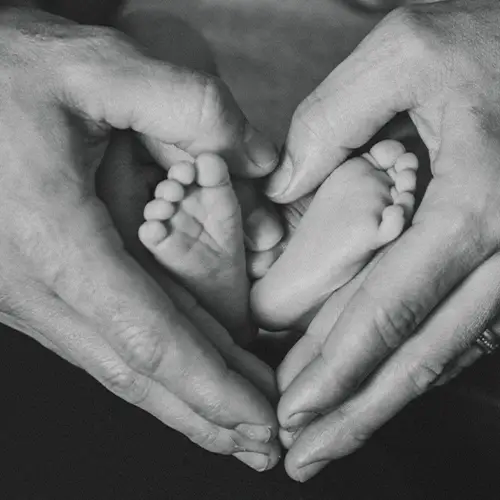
Bringing our son home changed everything
Some moments alter your understanding of life entirely.
For us, that moment arrived in a hospital room after one of the most emotionally intense periods we had ever experienced together.
Our son was healthy.
Even now, writing those words feels oddly emotional. Because after months of stress, fear, legal formalities, waiting and emotional exhaustion, nothing else mattered in that moment apart from the fact that he was finally with us.
I remember looking at him and feeling something much more complex than simple happiness.
There was relief, certainly. But also disbelief, exhaustion and an overwhelming emotional stillness after so many months of internal tension.
And that is when we fully understood something important.
Surrogacy changes people.
Not simply because you become parents, but because the process itself fundamentally alters your understanding of patience, vulnerability and emotional endurance.
We entered this experience believing we were pursuing parenthood. We emerged from it far more aware of our own emotional limitations, our capacity to adapt under pressure and the importance of supporting one another through uncertainty.
We also learned that no two surrogacy journeys are remotely alike.
Some couples encounter legal complications. Others face medical setbacks. Others struggle primarily with the emotional strain. Every experience unfolds differently, which is why I believe it is dangerous to romanticise surrogacy or portray it as an easy solution.
It is not easy.
It is demanding, unpredictable and, at times, deeply exhausting.
But it is also profoundly human.
What I would tell any British couple considering surrogacy abroad
If someone had explained all of this to us years earlier with complete honesty, I suspect we still would have felt frightened. But perhaps we would have felt less alone in those emotions.
Because yes, there will be difficult conversations. There may be disagreements between partners. There will almost certainly be moments of emotional fatigue and fear that things may not go according to plan.
That does not mean you are making the wrong decision.
It simply means you are navigating something immensely complex.
Today, our son races around the house creating chaos in the way only small children can, and everything we experienced has become part of our family story. We do not hide the route we took to parenthood. In many ways, we are proud of it.
Not because it was easy, but because we survived it together.
And perhaps that is the most honest thing I can say about international surrogacy.
It tests you emotionally in ways you cannot fully anticipate. It demands patience you are not always sure you possess. But it also reveals a remarkable capacity for resilience, both individually and as a couple.
Would we go through it all again knowing everything we know now?
Without hesitation.
Because despite the uncertainty, the exhaustion and the fear, we now have the privilege of holding our son in our arms every single day.
And for us, that changed absolutely everything.