

Navigating the landscape of modern family building requires more than just medical science; it demands a solid understanding of family law. For many intended parents navigating international surrogacy, establishing legal parentage is the final, crucial hurdle. The role of the biological father is central to this, but depending on the jurisdiction, genetics alone might not automatically grant full legal rights. In some unique international scenarios, establishing rights requires understanding the complex process of filiation by adoption of the biological father.
The Legal Definition of a Biological Father
In the United States and international law, the biological father is the male who provided the sperm resulting in conception. While in many US states a pre-birth order (PBO) seamlessly establishes legal parentage before the child is even born, the situation becomes vastly more complex when surrogacy takes place overseas or in jurisdictions that strictly adhere to traditional parentage models.
Why “Filiation by Adoption”?
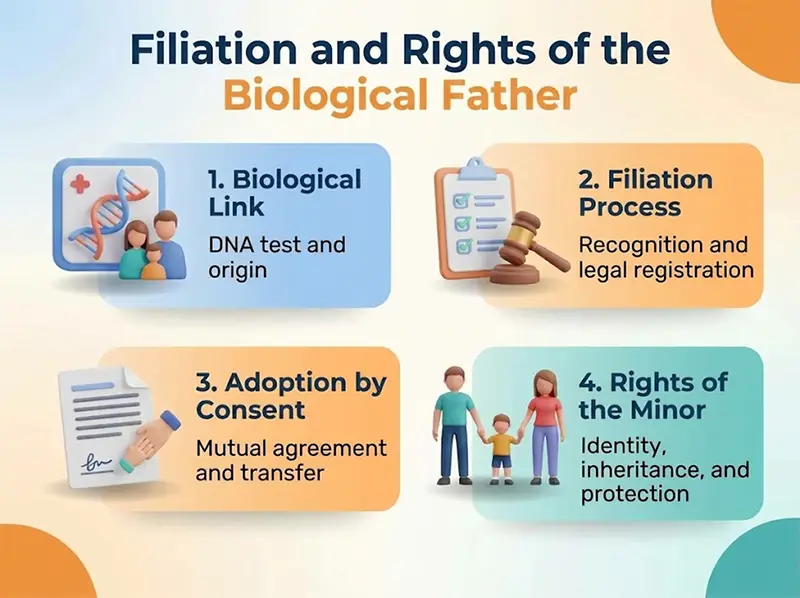
The phrase filiation by adoption of the biological father refers to the legal steps a genetic father must take to solidify his parental rights in jurisdictions that do not automatically recognize surrogacy contracts. If a country dictates that the woman who delivers the child is the legal mother, the genetic father may have to formally establish his paternity and, in some international legal frameworks, technically “adopt” his own child to sever the surrogate’s legal ties and establish his own exclusive rights.
Single Men and the Path to Fatherhood
Single men are increasingly pursuing surrogacy to build their families. For a single male, proving he is the biological father through a verified DNA test is usually the primary requirement to obtain a Consular Report of Birth Abroad (CRBA) and a US passport for the child.
This process requires meticulous legal foresight. If you are starting this journey independently, you can find tailored information by exploring specific surrogacy programs for single men. These pathways are medically and legally structured to protect single fathers, ensuring that the establishment of their legal rights is seamless.
Science Meets Law: DNA and Parentage
According to guidelines from the American Society for Reproductive Medicine (ASRM), the separation of genetic and gestational roles has revolutionized family building. Legally, courts rely on clinical evidence to establish filiation:
- Genetic Testing: A standard buccal swab from the father and child, processed by an AABB-accredited laboratory.
- Relinquishment of Rights: A legal affidavit signed by the gestational carrier.
- Court Decrees: Legal judgments establishing the genetic link and finalizing the parental status.
Financial Planning for Legal Parentage
Securing your legal rights as a biological father involves various legal fees, including drafting surrogacy contracts, DNA testing, court filing fees, and immigration attorneys if returning to the US from abroad.
Understanding the full financial scope is critical. Legal procedures like filiation by adoption of the biological father can alter your budget. We highly recommend reviewing the comprehensive breakdown of surrogacy costs to ensure you are fully prepared for the legal fees associated with establishing parentage.
Securing Your Family’s Future
Being a biological father is a lifelong commitment that begins with a solid legal foundation. Whether you are navigating a pre-birth order in a surrogacy-friendly state or dealing with the complexities of international filiation and step-parent adoptions, the goal remains the same: undeniable legal recognition of your family. By partnering with experienced professionals, you safeguard your child’s future rights regarding inheritance, citizenship, and healthcare.