Skip to content
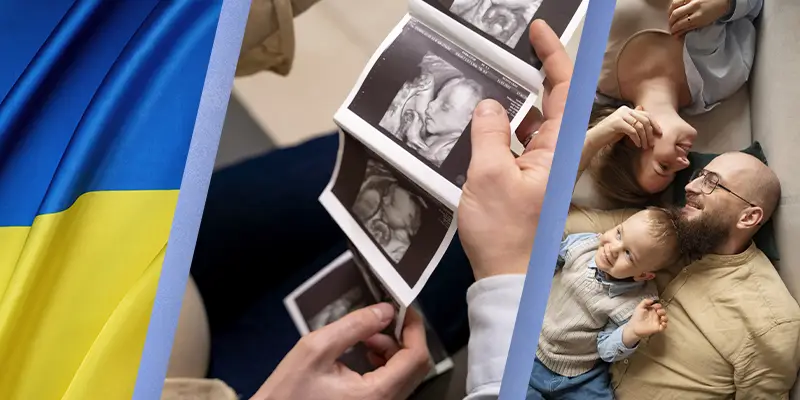
There is a particular sort of exhaustion that settles into your life after years of trying to become parents.
Not dramatic exhaustion. Not the sort people immediately notice. It is quieter than that. A steady emotional fatigue that creeps into everyday routines, into conversations over dinner, into long silences after medical appointments where you already know the outcome before anyone says it aloud.
For us, that chapter lasted years.
We tried nearly everything available to us. Fertility treatment after fertility treatment, consultations with specialists, IVF cycles, medical programmes that promised possibility but rarely offered comfort. Each attempt began with cautious optimism and ended leaving us slightly more depleted than before.
And what made it particularly painful was not simply the disappointment itself, but the feeling that the process had become increasingly clinical and impersonal.
At times we felt less like hopeful future parents and more like another case file moving through a system.
What we longed for was something remarkably ordinary: a family of our own.
When international surrogacy first entered our conversations, it did not feel like a clear solution. If anything, it felt overwhelming. We approached the idea with a mixture of curiosity, hesitation and an enormous amount of fear.
Because once you begin seriously researching surrogacy abroad, you realise very quickly how emotionally and legally significant the decision truly is.
There were ethical considerations, legal questions, concerns about medical procedures, practical logistics and, above all, the underlying question neither of us could quite answer confidently at the time:
Were we emotionally capable of going through something this complex?
Why Ukraine became part of our story
As we explored different options internationally, Ukraine kept appearing in conversations, forums and recommendations from people who had already experienced the process themselves.
Still, deciding to move forward was far from simple.
We spent countless evenings discussing scenarios, timelines and risks. Some days we felt completely certain. On others, anxiety took over entirely. I suspect most couples considering surrogacy abroad experience exactly the same emotional push and pull, although very few people speak openly about it.
Eventually we were introduced to Gestlife.
What stood out immediately was not polished sales language or unrealistic promises. Quite the opposite, in fact. What reassured us was the calmness with which everything was explained.
For the first time in a long while, we felt someone was genuinely taking the time to guide us through the reality of the process rather than simply presenting the positive headlines.
And the reality is this: international surrogacy is extraordinarily complex.
There are legal frameworks to understand, medical procedures to coordinate, international documentation to prepare and endless practical matters to organise. The deeper we went into the process, the more aware we became of the emotional weight attached to every decision.
Yet despite the complexity, we also began to feel something we had not felt for quite some time.
Hope.
I still remember our first trip to Ukraine vividly. We arrived carrying equal amounts of nervousness and cautious optimism. Leaving our genetic material there felt surreal — as though we were stepping into a completely unfamiliar chapter of our lives without any certainty about how it might end.
And yet, unexpectedly, things progressed quickly.
The embryos developed successfully and the surrogate became pregnant on the very first attempt.
When we received that news, I do not think either of us quite knew how to react.
After years of disappointment, hope becomes strangely difficult to trust. You almost instinctively brace yourself against good news because experience has conditioned you to expect setbacks.
It took us time to allow ourselves to believe this might actually happen.
Living through uncertainty while the world around us felt unstable
Our surrogacy journey unfolded during an especially difficult period for Ukraine, which added an entirely different emotional dimension to the experience.
Naturally, people asked whether we were frightened.
The truthful answer is yes — deeply so at times.
There were concerns about travel, safety, logistics and the uncertainty surrounding the situation in the country itself. But what continually surprised us throughout the process was the extraordinary professionalism and humanity of the people supporting us both locally and abroad.
From the outside, surrogacy can appear highly procedural. One imagines contracts, clinics and legal paperwork. What we experienced instead was something far more personal.
There was constant communication throughout the process. Updates, calls, reassurance, practical guidance — often exactly at the moments we needed it most.
And that emotional support matters enormously when you are navigating something this psychologically demanding.
Because the uncertainty never entirely disappears.
You spend months emotionally attached to medical milestones, timelines and decisions happening hundreds or thousands of miles away. Even ordinary life begins revolving around updates and waiting.
I particularly remember our second journey to Kyiv.
Emotionally, it was one of the most draining periods of the entire experience. The atmosphere surrounding the country naturally created anxiety, and by then we were already carrying months of accumulated emotional exhaustion.
Yet despite everything happening externally, there was always someone helping us move through the next challenge.
Whenever difficulties emerged — and they inevitably do in any international surrogacy arrangement — solutions were sought immediately. Questions were answered patiently. Practical problems were handled calmly.
That consistency of support changed the experience for us entirely.
Because while no one can remove the emotional strain completely, feeling supported prevents you from feeling isolated inside it.

Bringing our daughter home after years of waiting
There are moments in life that seem almost impossible to process while they are happening.
Holding our daughter for the first time was one of them.
After years spent wondering whether parenthood would ever happen for us, we were suddenly sitting there together, exhausted beyond words, staring at this tiny human being who had already transformed our lives completely.
I remember the journey home feeling strangely unreal.
We were physically drained, emotionally overwhelmed and yet, for the first time in years, profoundly calm. Our daughter slept peacefully while we sat there quietly trying to comprehend everything it had taken to reach that moment.
And that is perhaps the most difficult thing to explain to anyone who has not experienced international surrogacy firsthand.
The process changes you.
Not only because you become parents, but because the emotional journey itself reshapes your understanding of resilience, patience and vulnerability.
We had been warned from the beginning that the process could be difficult. Emotionally demanding. Mentally exhausting at times.
All of that proved true.
But what also proved true was something equally important: the right support can transform how you survive those difficult moments.
We never felt abandoned throughout the process.
There was always someone available either locally or in Ukraine whenever problems surfaced, and that allowed us to focus emotionally on the only thing that truly mattered — continuing forward together.
Now, when we look at our daughter, it is impossible not to think about everything that came before her arrival.
Because she represents far more than the conclusion of a medical process.
She represents years of longing, difficult decisions, emotional endurance and an extraordinary amount of love.
What this experience taught us about surrogacy — and ourselves
If another British couple asked us today what matters most before beginning international surrogacy, our answer would be surprisingly simple.
Prepare emotionally as much as practically.
Of course the legal and medical aspects matter enormously. You need clarity, reliable information and proper guidance throughout the process. But emotional preparation is equally essential because surrogacy abroad places enormous psychological pressure on intended parents.
There will be moments of optimism and moments of genuine fear.
There will be periods where everything appears to progress smoothly and others where uncertainty suddenly returns without warning.
That emotional instability is entirely normal.
We were fortunate in many ways. Our journey progressed relatively quickly compared to many others. Even so, there were sleepless nights, emotionally difficult periods and moments where anxiety became overwhelming.
Which is precisely why we now understand every couple who hesitates before starting.
We hesitated too.
And if we had to relive the entire process tomorrow, we would probably still feel frightened at the beginning.
But we would also know something we did not know back then.
We would know what it feels like to finally walk through your own front door carrying the child you spent years dreaming about.
Today, we are simply a family.
And despite every difficult moment along the way, that still feels quietly extraordinary.