

For countless intended parents worldwide, the journey to parenthood requires the intervention of third-party reproduction. Among the most transformative advancements in assisted reproductive technology (ART) is the seamless integration of egg donation with gestational surrogacy. While it may seem complex, the biological, medical, and legal compatibility between these two processes is highly refined, offering success rates that are among the highest in modern fertility treatments.
In this comprehensive guide, we will break down the mechanics of integrating an egg donor, the medical synergies involved, and what intended parents need to know to navigate this life-changing pathway successfully.
The Foundations of Third-Party Reproduction
To understand compatibility, we must first look at the roles involved. Gestational surrogacy involves a surrogate mother (gestational carrier) who carries a pregnancy for the intended parents. Crucially, she shares no genetic link with the child. If the intended mother cannot provide viable oocytes, or if the intended parents are a same-sex male couple, an egg donor is required.
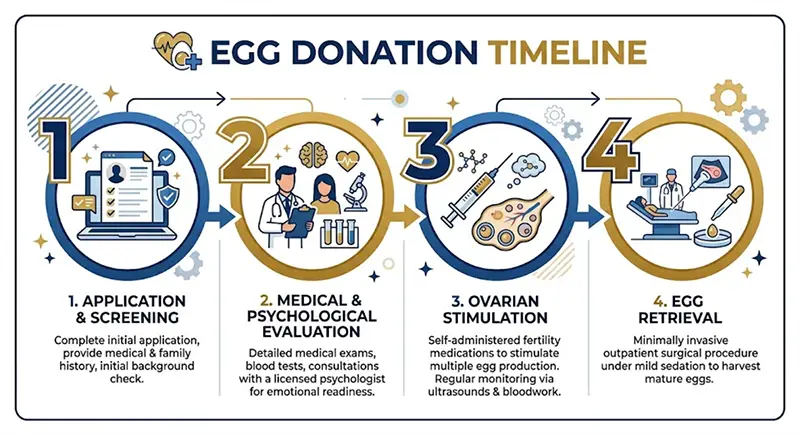
The process of egg donation ensures that healthy, young gametes are used to create embryos via In Vitro Fertilization (IVF). According to guidelines set by the American Society for Reproductive Medicine (ASRM), strict screening protocols must be in place to ensure the physical and psychological well-being of the young women who step forward to donate eggs.
Finding the Right Donor: Where to Donate Eggs
Many young women looking into altruistic or compensated programs frequently ask, “where can I donate eggs?” Reputable fertility clinics and specialized donor agencies manage extensive databases. Donors undergo rigorous genetic testing, infectious disease screening, and psychological evaluations. For intended parents, this means accessing a secure pool of candidates. You can select a donor based on physical traits, educational background, medical history, and sometimes even personality profiles.
Clinical Synergy, How Egg Donation Meets Surrogacy
The compatibility between the donor and the surrogate is managed entirely in the embryology lab. Because the surrogate is only providing the uterine environment, blood type compatibility between the donor and the surrogate is rarely a clinical concern, unlike organ transplants.
If you are new to the concepts of third-party reproduction, we highly recommend reading our foundational article explaining exactly what surrogacy is, its types, models, and key benefits (What is surrogacy, types, and key benefits). This resource clarifies why gestational surrogacy—where the embryo is created outside the womb using donor or intended parent genetics—is the safest and most legally sound route today.
The Step-by-Step IVF Protocol
The medical timeline is a carefully orchestrated dance of endocrinology and embryology:
- Donor Synchronization: If doing a “fresh transfer,” the donor’s cycle is synced with the gestational carrier’s cycle using birth control pills and reproductive hormones. However, modern protocols often prefer “freeze-all” cycles using vitrification, which offers higher flexibility and safety.
- Ovarian Stimulation: The donor takes injectable medications to produce multiple mature eggs.
- Egg Retrieval: A minimally invasive procedure extracts the eggs from the donor’s ovaries.
- Fertilization and Culturing: The retrieved eggs are fertilized with the intended father’s (or donor’s) sperm. The embryos develop for 5 to 6 days into blastocysts. Preimplantation Genetic Testing (PGT-A) is commonly performed at this stage to ensure chromosomal normality.
- Embryo Transfer: The healthiest embryo is transferred into the prepared uterus of the surrogate.
Financial Planning for Combined Programs
Combining an egg donor cycle with a surrogacy arrangement represents a significant financial commitment. The budget must account for donor agency fees, donor compensation, IVF clinic procedures, medications for both the donor and the surrogate, legal contracts, and surrogate compensation.
Understanding these costs upfront is critical for stress-free family building. To help you plan your financial strategy effectively, review our detailed breakdown on the surrogacy pricing, which outlines the comprehensive expenses involved when third-party genetics are required.
A Pathway of Hope
The compatibility between egg donation and surrogacy is an established medical reality that has built thousands of families. By dividing the genetic and gestational responsibilities, intended parents can mitigate medical risks, ensure higher IVF success rates, and establish clear legal parentage from the moment of birth. Working with experienced agencies, top-tier fertility clinics, and adhering to international medical standards ensures that your journey is as smooth and joyful as possible.